Issuer study · NBFC · gold loans
Chemmanur Credits and Investments
A Kerala gold lender that has come to the public for money nine times in under four years, and is funded almost entirely by individuals in two states. Here is what the money does, what protects it, what its rating history actually shows, and what its own bonds already change hands at.
Published 4 August 2026 · updated with the latest market and subscription data
The short version
This company already has 38 bonds trading on the exchange, and the market values them at a median yield of 13.49%. It is now selling new bonds at 9.25% to 12.68%. At six of the seven maturities on offer, you can buy its existing paper more cheaply than the thing being sold to you.
Chemmanur Credits and Investments is a non-deposit-taking finance company based in Thrissur, Kerala. It lends money against household gold jewellery through 302 branches across six states, and it is promoted by Chemmanur Devassykutty Boby, better known as Boby Chemmanur. It has been lending for more than fourteen years.
What is unusual is not the lending. It is the borrowing. Since December 2022 the company has run eight public bond issues, asking the public for ₹750 crore and raising ₹601 crore. This is the ninth. Almost every rupee it lends was borrowed from individual savers in Kerala and Tamil Nadu, one ten thousand rupee application at a time.
We read all 537 pages of the offer document, including all three years of audited accounts, the auditors' reports, the CARO annexures and the rating annexure. We pulled every rating action any agency has ever taken on this company back to 2015. And we ran every one of its 38 already-listed bonds through our own exchange feed, six months of daily closes, to see what they actually change hands at. That turned out to be the most useful thing on this page. Where a claim mattered we sent a second researcher to try to knock it down. Some things we could not settle, and those are listed near the end.
What you are actually buying
Seven separate bonds. Four pay interest into your bank account every month. Three pay nothing until maturity and then hand back a larger lump sum. Every one is a promise from this company and nothing else.
| Series | Tenor | Interest | Coupon | Effective yield | You get back | Matures |
|---|---|---|---|---|---|---|
| I | 18 months | Monthly | 10.25% | 10.75% | ₹1,000 | 19 Feb 2028 |
| II | 24 months | Monthly | 10.80% | 11.35% | ₹1,000 | 19 Aug 2028 |
| III | 36 months | Monthly | 11.25% | 11.85% | ₹1,000 | 18 Aug 2029 |
| IV | 61 months | Monthly | 12.00% | 12.68% | ₹1,000 | 19 Sep 2031 |
| V | 400 days | At maturity | none | 9.25% | ₹1,101.81 | 23 Sep 2027 |
| VI | 24 months | At maturity | none | 11.00% | ₹1,232.00 | 19 Aug 2028 |
| VII | 72 months | At maturity | none | 12.25% | ₹2,000.00 | 19 Aug 2032 |
Two features are unusual and both favour you. First, the coupon is identical for every category of investor. Most bond issues pay retail buyers a little more than institutions; this one does not discriminate. Second, half the issue is reserved for retail applications under ₹2 lakh, which is a generous share.
Series VII is the one that will be marketed hardest. It doubles ₹1,000 into ₹2,000 over six years. That is a genuine 12.25% a year compounded, not a gimmick. It is also a six year unsecured-in-practice bet on a small lender, which is the whole point of this page.
The ninth issue in under four years
The company discloses every previous public issue, how much was asked for, and how much actually came in. It is the most revealing table it publishes.
| Issue | Opened | Asked for | Raised | Filled | To new lending | To repaying debt |
|---|---|---|---|---|---|---|
| 1 | 14 Dec 2022 | 100.00 | 92.23 | 92% | 85.68 | 6.55 |
| 2 | 16 Oct 2023 | 100.00 | 60.21 | 60% | 59.65 | 0.56 |
| 3 | 20 Feb 2024 | 100.00 | 48.14 | 48% | 44.39 | 3.75 |
| 4 | 26 Jul 2024 | 60.00 | 60.00 | 100% | 54.94 | 5.06 |
| 5 | 31 Dec 2024 | 90.00 | 63.67 | 71% | 63.67 | 0.00 |
| 6 | 3 Jun 2025 | 100.00 | 83.34 | 83% | 83.34 | 0.00 |
| 7 | 17 Oct 2025 | 100.00 | 93.54 | 94% | 53.11 | 40.43 |
| 8 | 2 Mar 2026 | 100.00 | 99.90 | 100% | 42.69 | 57.21 |
| Eight issues | 750.00 | 601.02 | 80% | 487.47 | 113.56 | |
| 9 (this one) | 4 Aug 2026 | 150.00 | Split between lending and repayment not disclosed in advance | |||
Read the last two columns. For the first six issues, nearly every rupee raised went into new gold loans. Then it changed. Issue 7 sent 43% of the money to repaying existing borrowings. Issue 8 sent 57%. The newest savers are increasingly repaying the older savers.
The stated purpose of this issue does not separate the two
The stated objects commit at least 75% of the money to "onward lending, financing, and for repayment/prepayment of principal and interest on borrowings of the Company". Those are two very different activities in one sentence, and the split between them is not disclosed before you apply. Given that ₹187.89 crore of the company's borrowings fall due within twelve months, the direction of travel from issues 7 and 8 is the best guide you have.
There is no monitoring agency. SEBI does not require one for an issue this size, so the board monitors itself. A statutory auditor's certificate on where the money went goes to the debenture trustee each quarter, and that is the check.
How it is selling. The issue opened on 4 August and runs to 17 August. The published subscription figures need reading carefully, because they are not what they look like at first glance.
| Stage | Retail | Non-institutional | Institutional | Overall |
|---|---|---|---|---|
| Day one | 0.16x | 0.81x | 0.00x | 0.41x |
| Day three | 0.50x | 1.92x | 0.04x | 1.02x |
| Latest | 0.53x | 1.99x | 0.04x | 1.07x |
"Oversubscribed" here does not mean the issue is full
The subscription multiple is calculated against the base issue of ₹75 crore, which is the 7,50,000 bonds actually reserved. It is not calculated against the ₹150 crore the company is asking for, because the second ₹75 crore is a green shoe option that only exists if the money turns up.
So 1.07 times does not mean the issue is oversubscribed. It means roughly ₹80 crore of bids against a ₹150 crore ask, or about 53% of what the company came for. Crossing one times is the point at which the base is covered and the company can begin retaining oversubscription, not the point at which it is done.
Underneath that, the shape matters more than the headline. Retail is at roughly half its allocation, having taken about ₹20 crore of the ₹37.5 crore set aside for it. The number carrying the book is non-institutional, at close to twice its ₹30 crore reservation, which is corporates, trusts and individuals writing tickets above ₹2 lakh.
Institutions have taken 0.04 times their slice, about ₹30 lakh of a ₹7.5 crore reservation. In the March 2026 issue the institutional category closed at zero. Across nine issues and ₹601 crore raised, professional money has stayed almost entirely away from this paper. The people funding this lender are individuals.
Why the book grew, which is not what it looks like
Here are three numbers the company discloses on the same page.
The company's own figures. The loan book rose 37% in the year to March 2026 while the gold securing it fell from 1.05 tonnes to 0.82 tonnes and the number of loan accounts fell by 4,681. The average loan per transaction went from ₹63,272 to ₹93,501.
The company's own industry section explains it. Quoting ICRA, whose industry report the company commissioned for this issue: the average gold price in India rose over 60% in the year to March 2026, after 33% the year before. Gold went from ₹7,717 a gram in March 2024 to ₹12,325 in March 2026.
So the book grew because the collateral repriced, not because the business found new customers. Fewer people borrowed, and each of them borrowed half as much again against the same chain.
Why this matters more than any other number on this page
The average loan is written at 65.36% of the value of the gold, and 55.56% of the book was written at between 70% and 80%. Those percentages are measured against a gold price that has risen 60% in a year. ICRA notes single day corrections of up to 5%.
If gold falls, three things happen at once. The loan book shrinks mechanically. The cushion between what was lent and what the gold fetches thins. And auctions become both more necessary and less remunerative. In the year to March 2026 the company auctioned just 54 loan accounts and made a surplus on them. In FY2024, when gold rose more slowly, it auctioned 563 accounts and took a deficit of ₹21.82 lakh.
India Ratings writes that the company "has successfully navigated multiple business cycles, including periods of significant volatility in gold prices." What the disclosed numbers show is a book assembled during the steepest gold rally in the series.
Who actually funds this lender
Most finance companies borrow from banks and lend to the public. This one borrows from the public.
| Source | ₹ crore | Share | Who lends it |
|---|---|---|---|
| Public issue bonds | 429.06 | 59.5% | Individuals, via issues like this one |
| Subordinated debt | 189.79 | 26.3% | Individuals. Unsecured. Unrated by anyone |
| Bank borrowings | 39.76 | 5.5% | SBI, Federal, Dhanlaxmi, Indian Overseas |
| Total | 658.61 | 91.3% | The rest is accrued interest and payables |
The company lists the ten largest holders of its outstanding bonds and the ten largest holders of its subordinated debt. Every single one of the twenty is an individual. The largest bondholder owns 0.47% of the stock, ₹2 crore. The largest subordinated debt holder owns 1.14%. There is not one bank, fund, insurer or institution anywhere in either list.
India Ratings says it plainly: bond and subordinated debt investors "mostly consist of individuals from Kerala and Tamil Nadu", and "the funds mobilised through the NCD route remain geographically concentrated in Kerala". The company's assets are 97% in five southern states. So are its liabilities. A regional shock would hit both sides of the balance sheet at once.
The ₹199.79 crore nobody has rated
Larger than this entire bond issue, and sold to the same savers, is ₹199.79 crore of unsecured subordinated debt at coupons running from 10.00% up to 15.38%. Against every series, the offer document records "Credit Rating: NA". Subordinated debt counts as Tier II capital, which is precisely why it ranks behind you if things go wrong, and it is a quarter of how this company is funded.
Some of it has matured and never been collected. ₹153.30 lakh of subordinated debt sits matured and unclaimed, including one series whose redemption date was 11 February 2018. A further ₹34.95 lakh of older privately placed bonds is matured and unclaimed, with dates running back to March 2021.
We computed the cost of all this from the accounts: interest expense of ₹77.92 crore against average borrowings of about ₹595.86 crore is a cost of funds near 13.1%. That is what this company must pay to exist, and it explains the coupons exactly. It lends at 19% to 25% and pays about 13% for the money.
Three agencies have looked at this company. They gave three different answers.
The marketing says BBB. The full history is more interesting.
| Date | Agency | Rating | What happened |
|---|---|---|---|
| 2015 to Apr 2018 | CARE | BB+ | Below investment grade |
| 27 Dec 2018 | CRISIL | BBB minus | Two notches higher, on a change of agency |
| 3 Apr 2019 | CARE | Withdrawn | At the company's request, mandate unused |
| 6 May 2020 | CRISIL | BBB minus, watch negative | Covid |
| 3 Nov 2021 | CRISIL | BBB minus, negative | Asset quality collapse, see below |
| 25 Aug 2022 | CRISIL | BBB minus, stable | Outlook restored |
| Jan 2024 to Feb 2026 | India Ratings | BBB minus | Six consecutive affirmations |
| 28 Oct 2025 | CRISIL | BBB minus | Still one notch below. Last public action |
| 26 Jun 2026 | India Ratings | BBB | Upgrade. Highest rating ever held. Five weeks before this issue |
Three things stand out.
The company has never been rated above BBB by anyone. There is exactly one rating-level upgrade in its entire history and it happened five weeks before this issue opened. The 2018 move from BB+ to BBB minus was not an upgrade, it was a change of agency: CARE had it two notches below investment grade in April 2018, CRISIL assigned BBB minus in December 2018, and CARE's remaining mandate was withdrawn at the company's request four months later.
The split rating is live right now. CRISIL's last published action, on 28 October 2025, left this company at CRISIL BBB minus. India Ratings says BBB. Both are standalone views of the same balance sheet. The company discloses both. The issue is marketed on the higher one.
The upgrade did not change the price. This issue's coupon table is identical, series for series, to the March 2026 issue that was sold at BBB minus. Same 10.75% at 18 months, same 9.25% at 400 days, same 12.68% at 61 months. The rating improved by a notch, the size went from ₹100 crore to ₹150 crore, and the yield stayed exactly where it was.
One thing genuinely to the company's credit: no agency has ever tagged it "issuer not cooperating". Every withdrawal in its history is either a redemption confirmed independently by CRISIL, or CARE's unused mandate closed at the company's request. That is a clean disclosure record and it should be said.
The year this book was actually tested
Neither the offer document nor the current rating rationale mentions what follows. It comes from CRISIL's own published rationale of 3 November 2021, when it moved the outlook to Negative on "deterioration in Chemmanur Credit's asset quality metrics along with inability to conduct timely auctions".
| Measure | 31 Mar 2021 | At the review |
|---|---|---|
| Loans 90 days or more overdue | 22% | 33% |
| Loans 180 days or more overdue | 0.68% | 19.5% |
| Profit | ₹9.2 cr for FY21 | Loss of ₹14.5 cr in Q1 FY22 |
| Return on assets, annualised | positive | minus 15.2% |
This is the answer to the question every gold lender invites: has this book ever been under stress? It has, once, four years ago. A third of it went overdue, a fifth went severely overdue, and a quarter's loss wiped out one and a half years of profit. The auctions then caught up and the company recovered.
That episode cuts both ways honestly. It shows the collateral eventually did its job. It also shows what "inability to conduct timely auctions" costs, in a business where auctioning is the entire remedy, and it happened at a company one fifth of today's size.
One more number from CRISIL's October 2025 review, which is more recent: 90 days overdue of 2.2% and bad loans of 1.9% in the June 2025 quarter. India Ratings reports 0.9% for the full year to March 2026, eight months later.
Are the profits real?
Reported profit went from ₹1.72 crore to ₹2.48 crore to ₹20.07 crore across the three years. That is an eightfold jump, and it is what the rating upgrade rests on. It needs unpacking in both directions.
The year before was not what it looked like
In the year to March 2025 the company reported "other income" of ₹9.93 crore, against ₹0.42 crore the year before and ₹0.51 crore the year after. The auditors attached an Emphasis of Matter explaining it, and Note 3.7 spells it out: during that year most lease agreements were rewritten by addendum so they became short-term and fell outside the lease accounting standard. Reversing the lease liability and the corresponding asset produced a one-off gain of ₹9.60 crore.
Profit before tax that year was ₹4.76 crore. Take the accounting gain out and the year to March 2025 is a pre-tax loss of about ₹4.84 crore. The company did not lose money on paper only because it re-papered its rent agreements.
That matters because it is the base against which this year's eightfold jump is measured. The other half of the same change shows up in the year just gone: rent expense rose from ₹4.76 crore to ₹10.29 crore, while depreciation fell and lease interest fell with it.
But the latest year does look like genuine operating leverage
Measured against the previous year's income stripped of that gain, income rose 36% while total expenses rose 14.7%. India Ratings' figures agree: the cost to income ratio improved from 95.06% to 75.65%. The company added 302 branches' worth of scale and the branches finally started covering themselves. Return on assets of 2.57% and return on equity of about 16.9% are respectable numbers.
Two smaller items flattered it. Bad debts written off were ₹3.47 crore, against nothing the year before. And the provision line swung from a ₹0.99 crore charge to an ₹0.83 crore release, which India Ratings describes as a credit cost of minus 0.1%. Together those are worth roughly ₹4.3 crore of presentation on a ₹20 crore profit. The profit is mostly real. It is not entirely clean.
What is actually going bad
Headline bad loans are 0.93% of the book, which sounds excellent. The segment breakdown tells you why, and what it conceals.
| Product | Share of book | Bad loans | Direction |
|---|---|---|---|
| Gold loans | 95.60% | 0.08% | Growing |
| Microfinance (women's groups) | 3.91% | 12.47% | Being wound down |
| Gramin Shakthi business loans | 0.35% | 99.30% | Stopped writing new ones |
| Consumption loans | 0.01% | 100.00% | Stopped |
| Insta loans | 0.13% | 2.67% | Shrinking |
| Whole book | 100.00% | 0.93% | ₹7.14 cr of ₹770.49 cr |
Everything this company lent without gold behind it has gone bad, nearly completely. The business loan book is 99.30% non-performing. Consumption loans are 100%. The company has responded by stopping: business loan accounts fell from 10,600 to 4,655 to 2,470, and the average new business loan written last year was nil. Microfinance accounts fell from 45,376 to 29,049.
What remains is, to a rounding error, a gold loan monoline. That is a real strength for asset quality and a real concentration risk for everything else. It also means the 0.93% headline is a statement about gold, not about this company's credit judgement. Where it exercised credit judgement, it lost almost all of it.
Two other things are worth knowing. The book is genuinely granular: the twenty largest borrowers are 0.78% of advances, and nothing above a ₹50 lakh ticket exists. And loans to group companies are nil, as are all related party loans, guarantees and securities, in each of the last three years. For a promoter-controlled lender that is a meaningfully clean record.
Fraud is a running item rather than an event. In the year to March 2026 there were 204 cases of spurious or low purity gold pledged, on ₹2.55 crore of loans, of which ₹1.52 crore was the spurious portion and ₹1.36 crore was recovered. Separately, cash embezzlement by employees of ₹30.30 lakh and ₹42.99 lakh is disclosed, with only ₹6 lakh recovered on the larger amount. All of it is reported to the RBI, as required.
What actually protects your money
These bonds are secured. It is worth being precise about what that means here.
| Feature | What the document says |
|---|---|
| Security cover | 1.0 times, the regulatory minimum. Capri Global's retail bonds covenant 1.10 times |
| What is charged | Book debts, receivables, cash, loans and advances, present and future |
| What is excluded | Everything exclusively charged to SBI, Dhanlaxmi Bank, Federal Bank and Indian Overseas Bank |
| Ranking | Equal with existing secured creditors, not ahead of them |
| Further borrowing | Permitted, ranking equal or ahead, so long as 1.0 times is maintained |
| Guarantee | None. Not from the promoter, not from any group company |
| Debenture redemption reserve | None. Finance companies are exempt |
| Put or call option | None on any series |
| If the rating is cut | The company must provide additional security to the trustee |
| Dividends | Blocked until bond principal and interest due are paid or provided for |
| Default interest | At least 2% a year above the coupon for the period of default |
| Where you sue | Exclusively the courts of Thrissur, Kerala |
The document itself is candid about the limit of all this:
It is the duty of the debenture trustee to monitor that the security cover is maintained, however, the recovery of 100% of the amount shall depend on the market scenario prevalent at the time of enforcement of the security.
One point deserves emphasis because it is easy to miss. The banks are secured on the promoter's property. You are not. The company's own auditors record under CARO that "the Company does not hold any immovable property". Every bank facility is collateralised by land, buildings and flats owned personally by C D Boby and by five promoter-owned companies, backed by personal guarantees from Boby, his wife and his brother-in-law, and by corporate guarantees from those companies. Bondholders get none of that. Bondholders get a 1.0 times charge on loan receivables, expressly excluding whatever the banks hold exclusively.
Two claims also rank ahead of yours. The trustee's own expenses carry 18% a year interest and sit as a charge "in priority to the charge securing the NCDs". And statutory dues, including workers' claims and government dues, rank ahead under the Companies Act and the insolvency code.
The promoter, the brand, and the group
Chemmanur Devassykutty Boby owns 86.07% of this company and has been on its board since incorporation. None of his shares are pledged, and there are only 80 shareholders in total. A named group company, Chemmanur Gold Palace International, holds a further 12.49% in physical form.
Four of the six directors are one family: Boby as chairman and managing director, his wife Smitha Boby, his brother-in-law Lijo Moothedan, and his son-in-law Sibin Philipose. The two independent directors are substantive appointments, a chartered accountant of forty years' practice and a retired Canara Bank general manager who was internal ombudsman at South Indian Bank, and between them they chair the audit, nomination, stakeholders, risk, fraud and finance committees.
But the Debenture Committee has no independent director on it. It is the brother-in-law as chairman plus the chief executive, chief financial officer and company secretary, and it is the committee that approved this issue and both drafts of the offer document. The asset liability committee also has no independent director. And one independent director's departure in March 2025, after seven and a half years on the board, is recorded only as "Cessation" with no reason given and no resignation date. His replacement had been appointed five days earlier.
The company does not own its own name
The Chemmanur mark belongs to the promoter personally, not to the lender. The company pays him ₹1 lakh a month for it under a five year licence, on top of his ₹96 lakh salary, and the licence is revocable. The offer document is not internally consistent about the mark's status: one page says it is "pending for registration", another calls it a "registered trademark", and a third describes a separate unregistered logo used under a no-objection letter dated 22 September 2025. Other companies the promoter is interested in use the same mark.
For scale, the promoter's pay was 63% of the company's profit in FY2024 and 44% in FY2025, before the profit jump made it 5%.
What the company discloses about him personally
The company states that there is "no material litigation involving Promoter of the Company", and its summary table shows nil against promoters. The following are disclosed instead under the heading Directors, because he is also chairman and managing director.
- A criminal case brought by the actress Honey Rose Varghese, FIR 31/2025 at Ernakulam Central Police Station, alleging he made "sexually coloured remarks and body shaming comments with an intention to humiliate the Complainant in social media network". He was arrested on 8 January 2025, refused bail by the trial court and remanded to judicial custody, then granted bail by the Kerala High Court on 14 January 2025 on a ₹50,000 bond, about seven days inside. A charge sheet followed in June 2025. On 3 July 2026 both sides told the High Court the matter was settled, and on 23 July 2026 the Kerala High Court quashed the proceedings, recording that the dispute had been amicably resolved. The case is over and there was no conviction. The offer document is dated the same day and could not say so.
- A police case over lucky draws, FIR 235/2024, alleging unlawful gains from draws tied to tea sales by group company Boche Bhumiputra, said to have hurt Kerala state lottery sales. Anticipatory bail was granted and police filed a closure report on 31 January 2025 concluding the complaint rested on a mistake of fact.
- A ₹10 crore defamation claim against him in the Thrissur Sub Court by Jaison Chemmanur over alleged defamatory publications. The company discloses this, but we could find no independent report of it and could not establish who the claimant is.
- A cheque bouncing case in Bengaluru in which the company itself, through its chairman, is the fifth accused. The Karnataka High Court stayed proceedings on 25 April 2026.
The company confirms he is not a wilful defaulter, not a fugitive economic offender, and not debarred by SEBI, and the same is confirmed for every director.
The group has a regulatory record the rating does not capture
India Ratings rates this company on a standalone basis, so nothing below is in the rating. All of it is disclosed by the company itself.
Chemmanur Gold Palace International Limited, the group company that owns 12.49% of this lender, "raised funds through issuance of 6% participating preference shares by way of private placement aggregating to ₹288.28 crore from 5,323 investors" without applying for listing, without a credit rating, without appointing a merchant banker, and without filing an offer document. SEBI fined it ₹25 lakh by order of 30 April 2021. The penalty was paid. It also carries a ₹1.36 lakh MCA penalty from August 2024 for a late beneficial ownership filing.
Boby Chemmanur (No.1) Chits Private Limited has a compounding fee of ₹55.04 lakh pending with the Registrar of Chits across twenty-three chit funds, for failing to file minutes and balance sheets on time. It is contesting the amount in the Kerala High Court.
Across the group there are 608 pending cheque bouncing complaints totalling ₹1.49 crore, all of them filed by the group companies against others.
None of the six named group companies has ever been rated by any agency, and none has issued bonds publicly or privately in the last three years. Legally the group is not a group at all: this company has no holding company, no subsidiary and no associate. The six are sister companies under common ownership. Nothing filed for this issue describes what any of them does or how any of them performs.
One indirect linkage does exist and is worth naming: SBI's loan covenants include a group cross-default. A default by any group company to any bank triggers a 1.20% a year penalty on this company's entire outstanding.
The persona is the business model
It is tempting to treat a promoter's public behaviour as colour rather than credit analysis. In this case that would be a mistake, because the persona is how this group finds its customers and, more to the point, how it finds the savers who lend it money.
Boby Chemmanur is one of the most recognisable businessmen in Kerala, with roughly 1.6 million Instagram followers and 2.6 million on Facebook. He is known for spectacle. In 2012 he flew Diego Maradona to Kerala to open a jewellery showroom. In 2014 he ran 812 kilometres from Kasaragod to Thiruvananthapuram to promote a blood bank. He wrapped a Rolls Royce Phantom in gold and ran it as a taxi at ₹25,000 a day. He attended Thrissur Pooram in disguise. In 2024 he led a public "begging march" through Kerala to raise blood money for a Malayali on death row in Saudi Arabia, and handed over ₹1 crore of it himself.
The doctorate the company lists for him comes from this world too. It was conferred by World Records University, a UK-registered private body, at a Kuala Lumpur ceremony in May 2015, presented by Maradona and Karisma Kapoor. It is not an accredited academic degree. The group also claims a Guinness World Record; we could find no Guinness listing, only entries in Unique World Records, the Asia Book of Records and the India Book of Records, which are pay-to-enter private registries.
Here is what that looks like. Every one of these was checked as live before publication.
 0:11
Onam specialHis most watched clip. Eleven seconds of performing straight down the lens.
0:11
Onam specialHis most watched clip. Eleven seconds of performing straight down the lens.
 0:19
Throwing punches in a boxing ringA sixty year old jeweller working combinations on the pads.
0:19
Throwing punches in a boxing ringA sixty year old jeweller working combinations on the pads.
 0:15
The gold Rolls Royce, run as a taxi₹25,000 a day to ride a car he valued at ₹14 crore.
0:15
The gold Rolls Royce, run as a taxi₹25,000 a day to ride a car he valued at ₹14 crore.
 1:00
At Thrissur Pooram, in disguiseA mainstream news channel covering him going incognito to a festival.
1:00
At Thrissur Pooram, in disguiseA mainstream news channel covering him going incognito to a festival.
 0:29
The begging march for Abdul RahimLiterally begging in the street to raise blood money for a man on death row.
0:29
The begging march for Abdul RahimLiterally begging in the street to raise blood money for a man on death row.
 0:11
Waving to the crowd, in custodyFilmed and uploaded the day he was arrested. He is smiling and waving.
0:11
Waving to the crowd, in custodyFilmed and uploaded the day he was arrested. He is smiling and waving.
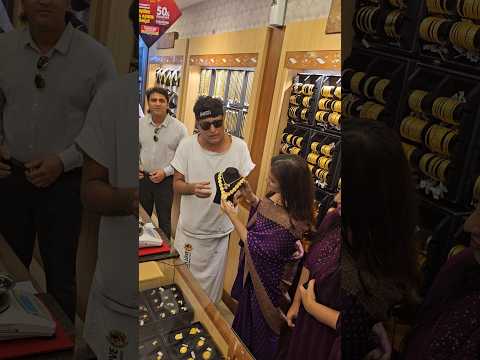 0:19
A showroom opening with a film actorThis exact format, actor plus showroom plus jewellery, is what the 2025 criminal case arose from.
0:19
A showroom opening with a film actorThis exact format, actor plus showroom plus jewellery, is what the 2025 criminal case arose from.
 0:19
Still dancing on stage, one week agoA launch event for a housing product, four days before this bond issue opened.
0:19
Still dancing on stage, one week agoA launch event for a housing product, four days before this bond issue opened.
 1:44
Taken into custody, January 2025The news report of the arrest, for the other side of the picture.
1:44
Taken into custody, January 2025The news report of the arrest, for the other side of the picture.
Links open on YouTube. We have not embedded the players, so nothing on this page loads from Google until you click. Every video was checked as live before publication; view counts were read at that point and will have moved since.
Why this belongs in a bond study
Ninety four percent of this company's funding comes from individual savers in Kerala and Tamil Nadu. Not one institution has taken a meaningful share of any issue it has ever sold. India Ratings says the reason the money comes in is "the long historical presence of the group in Kerala", which "helps it in sourcing NCDs from retail and high-net-worth individual investors".
In other words, the brand is the funding channel. That is a genuine strength, because it has worked nine times. It is also a genuine risk, because a brand that rests on one man's public standing is exposed to what happens to that standing, and he spent a week in judicial custody eighteen months ago.
How the rest of the group raises money
This is the part of the picture that sits furthest outside the issue documents, and it needs stating carefully. India Ratings assesses this company on a standalone basis. Nothing below is in the rating. None of it is a finding about the borrower on these bonds, which lends against gold, keeps its bad loans at 0.08% on that book, and has never lent a rupee to a related party.
But the lender sits inside a group, borrows its name from that group's promoter, and competes for the same savers' money. So the group's own record of raising retail money is context a lender to it would want.
There is a pattern in that record, and regulators have remarked on it more than once.
- 2017SEBI examined Chemmanur International Jewellers and found it had collected roughly ₹998 crore from the public between 2012-13 and 2014-15 as advances towards gold purchases, against gold sales in the same period of about ₹66 crore. SEBI's own words, as reported: "Large scale accumulation of fund from a very large number of persons has been found in two bank accounts... which doesn't match with its sale of gold." The arrangement was held to breach section 45S of the RBI Act, which prohibits unincorporated bodies from taking deposits. Reported by The News Minute, 28 September 2017. We have not seen the underlying SEBI document.
- 2022An RBI market intelligence visit documented what it described as unauthorised deposit acceptance activity, with share certificates issued as receipts. Same reporting.
- 2024The RBI flagged Phygicart, the group's e-commerce arm, as a "camouflaged money chain". Its revenue had fallen from ₹217.5 crore in 2021-22 to ₹99.3 crore in 2022-23, and no accounts have been filed since. A 2023 GST probe found a ₹37.86 lakh anomaly and levied a ₹11.57 lakh penalty. Reported by Newslaundry, 1 December 2025, from MCA filings.
- Nov 2025A review of MCA filings for eight jewellery LLPs connected to the promoter found 11,879 partners who had put in ₹764 crore, against combined reserves of minus ₹422 crore and a loss of ₹92 crore in 2023-24. Five of the eight reported no revenue at all, no inventory and no staff costs, while continuing to pay returns to their partners. Reported by The News Minute, 21 November 2025, from MCA filings. We have not independently pulled those filings.
What this does and does not mean
It does not mean this NBFC is doing any of that. Chemmanur Credits is a registered non-banking finance company, supervised by the RBI, audited without qualification for three years, forbidden from taking deposits and confirmed by its auditors as not having taken any. Its bonds are a regulated public issue with a filed offer document, a rating, a trustee and an exchange listing. That is the opposite of an unregistered deposit scheme, and the difference matters.
What it does mean is that the group around it has repeatedly raised large sums from ordinary savers in structures that regulators have questioned, and that the most recent of those, a set of LLPs holding ₹764 crore from nearly twelve thousand people, is reported to be paying returns out of incoming money rather than trading profits. A lender to any part of this group would want to know that, because reputational trouble in one arm travels to the others through the shared name. SBI evidently agrees: its loan covenants include a group cross default, under which a default by any group company to any bank triggers a penalty on this company's own borrowing.
One further point of fact, in the promoter's favour. He is no longer on the board of most of these entities. Company filings show he left Chemmanur Gold Palace International in January 2019, Boby Chemmanur (No.1) Chits in December 2018, and the never-operational Boby Chemmanur Airlines in December 2019. He holds four current affiliations, of which this NBFC is one, and the jewellery business is now run through an LLP in which he is a partner rather than a director. That is why the company can accurately say he "holds no directorships" outside this company while also listing 25 promoter group entities in which he has investments.
The letter from the RBI
Risk factor 1 discloses two supervisory events. The first is that an RBI inspection of the position as at 31 March 2022 raised concerns "relating to corporate governance, committee compositions, regulatory filings, KYC compliance, hypothecation documentation, grievance redressal mechanisms, and agency arrangements".
The second is current:
The Company received a supervisory letter from the RBI dated January 30, 2026, wherein the RBI highlighted certain supervisory concerns. The Company has submitted its response to the RBI vide its letter dated March 14, 2026. The Company is in the process of taking appropriate steps to ensure compliance with the supervisory concerns highlighted by the RBI.
What those concerns are is not disclosed. The company says it has had no further communication. Note that the same document states elsewhere: "No regulatory action is pending against the Issuer or its Promoter or directors before the SEBI or the Reserve Bank of India". A supervisory letter is not formal regulatory action, so both statements can be true at once, but a reader is entitled to notice the distance between them.
No RBI penalty has ever been imposed on this company. Its registration is valid, it has never accepted public deposits, and the auditors confirm compliance with the net owned fund requirement and the prudential norms in each of the last three years.
Separately, the company's secretarial audit for the year to March 2022 reported "the utilization of the proceeds of the issue of non-convertible debt securities prior to the date of allotment" and delays in regulatory filings.
What the market already thinks this credit is worth
Every comparison so far has been against what the company is asking for. There is a better test: what does Chemmanur's own paper change hands at, between real buyers and real sellers?
The company has 38 bonds listed on BSE from its eight previous issues. Twenty nine of them have traded, across 121 sessions since February, on ₹5.47 crore of turnover. This is not a dead market. There is a real, continuously quoted curve here, and it is the single most useful thing available on this issue.
| ISIN | Coupon | Matures | Sessions | Turnover | Last price | Median yield |
|---|---|---|---|---|---|---|
| INE051307CA6 | 12.00% | 9 Nov 2030 | 49 | ₹67.1 L | ₹996.10 | 12.84% |
| INE051307CJ7 | 10.25% | 18 Sep 2027 | 62 | ₹60.9 L | ₹995.69 | 15.06% |
| INE051307BT8 | 12.00% | 19 Jun 2030 | 47 | ₹58.5 L | ₹994.00 | 12.94% |
| INE051307AB8 | 11.50% | 11 Jan 2028 | 38 | ₹50.5 L | ₹1,001.00 | 12.25% |
| INE051307CC2 | 0% cum | 10 Sep 2031 | 74 | ₹32.4 L | ₹966.01 | 15.54% |
| INE051307BZ5 | 10.50% | 11 May 2027 | 27 | ₹29.2 L | ₹989.99 | 13.36% |
| INE051307CH1 | 0% cum | 22 Apr 2027 | 39 | ₹28.2 L | ₹1,019.00 | 14.77% |
| INE051307CB4 | 0% cum | 11 Nov 2026 | 30 | ₹28.1 L | ₹1,021.20 | 11.19% |
| INE051307AE2 | 0% cum | 9 Mar 2029 | 24 | ₹26.5 L | ₹1,402.00 | 15.05% |
| INE051307BV4 | 0% cum | 19 Apr 2031 | 50 | ₹23.7 L | ₹1,000.00 | 15.87% |
The most traded line, the 2031 cumulative bond, has printed on 74 of 121 sessions. Four lines have turned over more than half a crore each. A retail investor wanting out of a modest position could realistically find a buyer in these.
Now put the new issue next to it
Three of the seven new series mature within days of a bond the company already has listed. Those are near-perfect comparisons.
| New series | Offered | Its own bond at the same maturity | Traded | Gap |
|---|---|---|---|---|
| V, 400 daysmatures 23 Sep 2027 | 9.25% | INE051307CJ718 Sep 2027, 5 days apart | 14.07% | 4.82 |
| I, 18 monthsmatures 19 Feb 2028 | 10.75% | INE051307CG318 Mar 2028, 28 days apart | 13.48% | 2.73 |
| II, 24 monthsmatures 19 Aug 2028 | 11.35% | INE051307AM52 Nov 2028, 75 days apart | 11.38% | 0.03 |
| VI, 24m cumulativematures 19 Aug 2028 | 11.00% | INE051307AM52 Nov 2028, 75 days apart | 11.38% | 0.38 |
| III, 36 monthsmatures 18 Aug 2029 | 11.85% | INE051307BD213 Aug 2029, 5 days apart | 13.09% | 1.24 |
| IV, 61 monthsmatures 19 Sep 2031 | 12.68% | INE051307CC210 Sep 2031, 9 days apart | 15.77% | 3.09 |
| VII, 72m cumulativematures 19 Aug 2032 | 12.25% | INE051307CI918 Mar 2032, 154 days apart | 14.52% | 2.27 |
At six of the seven series, the new bonds pay less than the old ones
The clearest case is the shortest. Series V offers 9.25% for 400 days. A bond the company already has listed, maturing five days earlier, has been changing hands at a median 14.07%. That is a gap of nearly five percentage points on effectively the same instrument.
At five years the pattern repeats. Series IV offers 12.68% to September 2031. Its own bond maturing nine days earlier trades at 15.77%.
Whichever number is right about this credit, the buyer of the new issue is accepting the lower one.
The company's own paper has settled at a median of 13.49% across those 29 lines and six months of trading. The new issue's top series pays 12.68%, and its cheapest pays 9.25%. Both sit below what its existing bonds already yield.
The story in order
- 16 Dec 2008Incorporated in Kozhikode, Kerala. Registered office has moved four times since.
- 10 Jun 2010RBI registration as a non-deposit-taking finance company, number N-16-00185.
- 2015 to 2018CARE rates the company BB+, below investment grade.
- 27 Dec 2018CRISIL assigns BBB minus. Two notches higher, on a change of agency.
- 3 Apr 2019CARE withdraws its rating at the company's request. The mandate was never used.
- 3 Nov 2021CRISIL moves to Negative. Loans 90 days overdue reach 33%, 180 days overdue reach 19.5%, and the June quarter shows a loss of ₹14.5 crore.
- Aug 2022Outlook restored to Stable after 62% of the overdue book is recovered.
- 14 Dec 2022First public bond issue. ₹92.23 crore raised against ₹100 crore asked.
- 31 Mar 2022RBI inspection raises concerns on corporate governance, KYC and hypothecation documentation.
- Feb to Mar 2024Third public issue fills only 48%. The weakest of the series.
- 30 Aug 2023The statutory auditor resigns mid-term. Third auditor in seven years appointed.
- FY2024-25Lease agreements rewritten by addendum, producing a one-off gain of ₹9.60 crore and an auditors' Emphasis of Matter. Without it the year is a pre-tax loss.
- 8 Jan 2025The promoter is arrested in the case brought by the actress Honey Rose Varghese, refused bail by the trial court and remanded to judicial custody.
- 14 Jan 2025The Kerala High Court grants bail on a ₹50,000 bond, about seven days inside. He initially refuses to leave the jail in solidarity with other remand prisoners; the court calls it "drama" and he apologises. Two prison officials are later suspended over the visitors allowed to see him.
- 23 Mar 2025An independent director of seven and a half years leaves. Recorded as "Cessation", no reason given.
- 30 Jan 2026The RBI sends a supervisory letter. Contents not disclosed. The company replies on 14 March 2026 and says it is still working through the concerns.
- 2 to 16 Mar 2026Eighth public issue. ₹99.90 crore raised, 57% of it to repay existing borrowings.
- 3 Jul 2026The promoter and the complainant tell the Kerala High Court the matter is settled. Proceedings stayed.
- 23 Jul 2026The Kerala High Court quashes the criminal proceedings, recording that the dispute was amicably resolved. No conviction. The offer document is dated the same day.
- 26 Jun 2026India Ratings upgrades to BBB from BBB minus. The highest rating the company has ever held.
- 4 Aug 2026Ninth public issue opens at ₹150 crore, the largest yet, with the coupons unchanged from the March issue.
What we still cannot tell you
Some of what we set out to establish, we could not. These gaps are part of the finding.
- What the RBI's supervisory letter of 30 January 2026 actually says. Only that it exists, that the company replied on 14 March, and that remediation is in progress.
- How much of this money will go to lending and how much to repaying old bonds. The company bundles them into a single 75% commitment. The last two issues sent 43% and 57% to repayment.
- How these bonds traded before February. Our daily history for them starts there, so the six months we show is the whole of what we can see.
- Why nine of the 38 lines have never traded. They may simply be held by buyers who intend to hold, or the quotes may be too wide to cross. We cannot tell which.
- How often BBB rated Indian issuers actually default. Each rating agency publishes a default and transition study giving cumulative default rates by rating band. We could not retrieve one, so we are not quoting a number. India Ratings' own description of its BBB category is "moderate degree of safety, moderate credit risk", and BBB is the lowest rung of investment grade. One downgrade puts it below.
- Anything about the finances of the six group companies. They are named, their litigation is disclosed, and nothing is said about what they do or how they perform. We obtained their registration numbers but not their filings.
- How much gold gets auctioned in a normal year. Auction volumes for FY2025 are not disclosed. We have FY2024 (563 accounts) and FY2026 (54 accounts) and nothing in between.
The two sides, side by side
We are not licensed to tell you whether to buy this, and we will not. What follows is the case each way, drawn from the documents.
In favour
- No default, delay or rescheduling on any borrowing in the last three years, stated by the company and confirmed by the auditors' CARO report in each of the three years
- Every bond it has ever issued and matured has been redeemed, confirmed independently by CRISIL twice
- All three years of audit opinions are unmodified, with clean internal control opinions and no CARO qualification
- Upgraded to BBB in June 2026, the highest rating in the company's history
- Capital adequacy of 26.18% against a 15% floor, and Tier 1 of 17.30% against a 12% floor
- The twenty largest borrowers are 0.78% of the book, and nothing exceeds ₹50 lakh
- Zero loans, guarantees or securities to any related party in each of the last three years
- The promoter put ₹33 crore of his own equity in over two years and holds 86% with nothing pledged
- Gold loans run 0.08% bad, and the loss-making non-gold products are being closed down
- Costs fell sharply as the branch network matured, from 95% of income to 76%
- Every branch is gold-audited every 25 days and collections are never outsourced
- No agency has ever flagged it for failing to cooperate
- The criminal case against the promoter was quashed by the Kerala High Court in July 2026 with no conviction
- He has stepped off the boards of most group entities, and this NBFC has never lent to any of them
- At six years the yield premium over an AA name is a genuine three percentage points
Against it
- 94% of the funding comes from individuals buying its bonds and subordinated debt, and this is the ninth request in under four years
- The last issue sent 57% of what it raised to repaying earlier borrowings, and this issue does not disclose the split
- Six of the eight prior issues failed to raise what they asked for
- CRISIL still rates it one notch lower than the rating this issue is marketed on
- In 2021 a third of the loan book went 90 days overdue and a single quarter lost ₹14.5 crore
- The book grew 37% last year while the gold securing it fell 22%, on a gold price up 60%
- An RBI supervisory letter of January 2026 is disclosed with its contents withheld
- The prior year's profit existed only because of a ₹9.60 crore one-off lease accounting gain
- Security cover is 1.0 times, the bare regulatory minimum, with no guarantee and no redemption reserve
- The banks hold the promoter's personal property and guarantees. Bondholders hold neither
- ₹199.79 crore of subordinated debt, more than this whole issue, is unsecured and rated by nobody
- Four of six directors are one family, and the committee that approved this issue has no independent director
- The lender does not own its own brand and pays the promoter ₹1 lakh a month to use it
- A group company was fined by SEBI for raising ₹288 crore from 5,323 investors with no offer document
- The promoter spent a week in judicial custody in January 2025, and the brand the lender borrows is his personal standing
- Reporting from MCA filings describes eight group LLPs holding ₹764 crore from 11,879 partners against minus ₹422 crore of reserves
- Its own bonds trade at a median 13.49%, above every series in the new issue, including the 12.68% top rate
- At six of the seven maturities offered, its own listed paper yields more than the new bonds pay
- The 400 day series offers 9.25% while its own bond maturing five days earlier trades at 14.07%
- Institutions have taken 0.04 times their reserved slice, and took zero in the March 2026 issue
- The 1.07 times headline is against the ₹75 crore base, so the book stands at roughly ₹80 crore of the ₹150 crore sought
- Any dispute must be taken to the courts of Thrissur